Why Tree Removal Costs Vary So Much
If you have ever looked into having a large tree taken down on your property, you have probably noticed that tree removal prices can vary wildly from one quote to the next. This is not a sign that someone is trying to take advantage of you. The truth is that removing a tree is a complex job with many variables that affect the final price. In my years working as a tree surgeon in Cape Town, I have seen quotes range from a few hundred rand for a small sapling to tens of thousands for a mature eucalyptus or pine tree in a tight spot. Understanding what drives these costs can help you make sense of the numbers and choose a service that fits your needs.
Tree removal prices depend on the size and species of the tree, its location relative to buildings and power lines, the equipment required, and the level of risk involved. Most professional arboriculture companies in Cape Town offer on-site quotes because no two trees are the same. A quote calculator online might give you a rough ballpark, but a proper assessment by a qualified tree surgeon is the only way to get an accurate price. Let us break down the main factors that influence what you will pay.
Tree Size and Species
The most obvious factor is the size of the tree. A small ornamental tree that can be felled with a single chainsaw cut and carried away by hand costs much less than a 20-metre eucalyptus with a trunk diameter of over a metre. Larger trees require more labour, more time, and often heavier equipment. The species also matters. Some trees, like pines, have relatively soft wood that cuts easily and breaks down quickly. Others, such as certain hardwoods, are dense and tough on chainsaws and wood chippers. Eucalyptus trees, common in Cape Town, are known for their brittle branches and tendency to drop limbs unexpectedly, which increases the risk and therefore the price.
Location and Accessibility
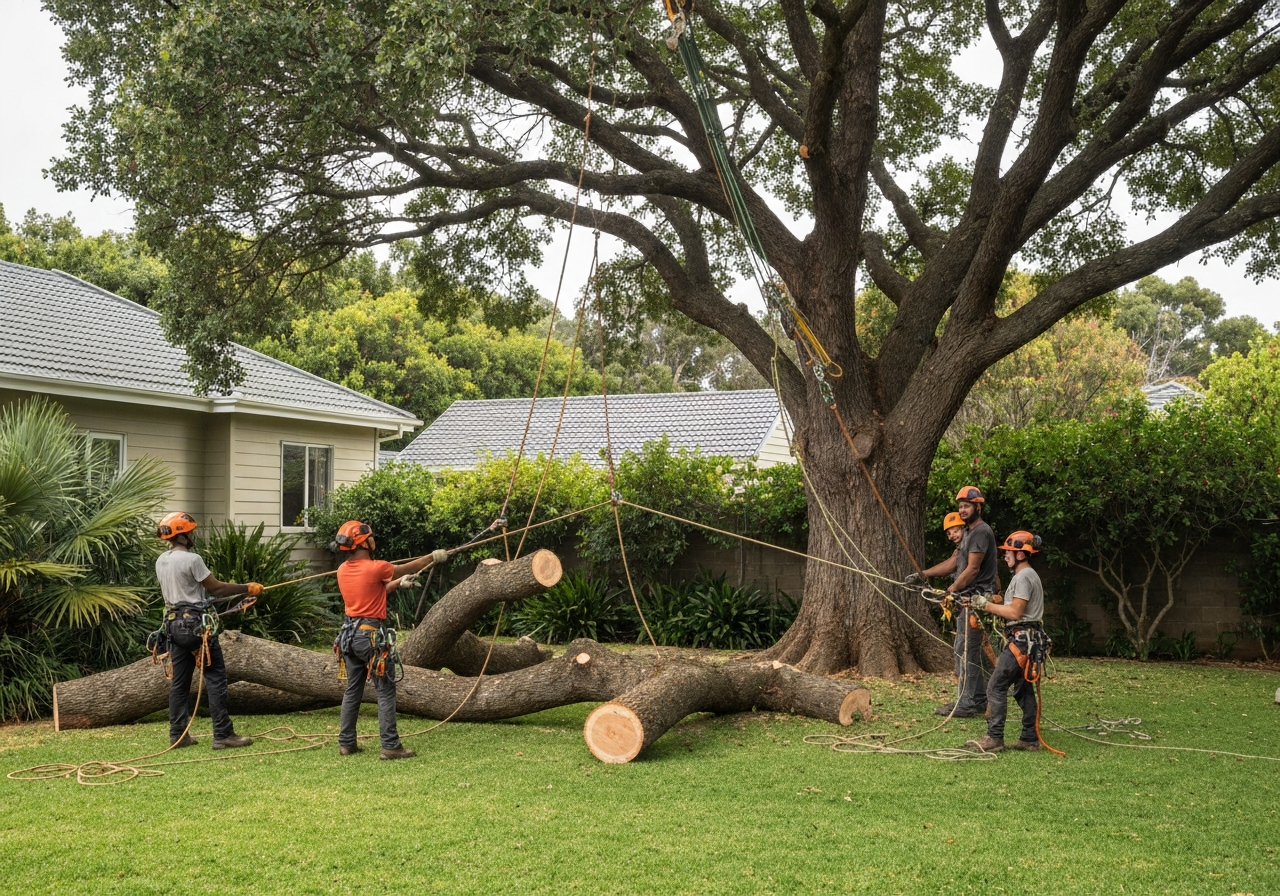
Where the tree stands on your property is a huge factor in tree removal prices. A tree in the middle of an open garden with easy truck access is straightforward. A tree growing close to your house, overhanging a swimming pool, or tangled in power lines is a different story. The arborist needs to plan the felling carefully to avoid damage to structures, and they may need to use rigging ropes to lower sections of the tree in a controlled manner. This technique, called sectional felling, takes more time and skill than simply cutting the tree at the base and letting it fall. If the tree is in a tight drop zone with limited space, the crew might need to climb and dismantle it piece by piece, which adds significantly to the cost.
Access for equipment also matters. If the tree is far from the road or behind a narrow gate, the crew may not be able to bring in a large truck or excavator. They might have to carry out debris removal by hand or use a smaller wood chipper, which takes longer. In some cases, if the tree is extremely large and inaccessible, a crane service might be required to lift sections out. That is a specialist job that will push the price up considerably.
Equipment and Labour
Professional tree removal involves more than just a chainsaw. A typical crew will bring chainsaws of various sizes, ropes, harnesses, rigging gear, a stump grinder for the remaining stump, and often a wood chipper to process branches into mulch. The cost of maintaining and transporting this equipment is built into the quote. Larger jobs may require an excavator to dig out roots or a crane for heavy lifting. The number of crew members also affects the price. A simple job might be handled by two people, while a complex removal in a risky location could require five or six, including a dedicated safety observer.
Risk and Insurance Liability
Tree removal is one of the most dangerous jobs in landscaping. A falling branch or a kickback from a chainsaw can cause serious injury or property damage. Reputable tree felling companies carry comprehensive insurance liability to cover any accidents. The cost of that insurance is reflected in their pricing. A company that offers a very low price may be cutting corners on safety or operating without proper cover. In Cape Town, where strong southeasterly winds can make conditions hazardous, professional crews will sometimes postpone a job if the weather is unsafe. That diligence costs money, but it protects you and your property.
Permits and Legal Requirements
Before any tree removal can happen, you need to check whether a tree preservation order applies to the tree. In many parts of Cape Town, certain species or trees above a certain size are protected. You may need a tree felling licence from the municipality before you can proceed. A professional tree surgeon can advise you on this and often help with the paperwork. If you go ahead without the necessary permits, you risk fines and legal trouble. The cost of applying for a permit is usually small compared to the overall job, but it is something to factor in.
What Is Included in the Quote?
When comparing tree removal prices, it is essential to check exactly what the quote covers. Some quotes include everything: felling the tree, removing all branches and logs, stump grinding, and tidying up the site. Others may quote only for the felling and leave you to deal with the debris or the stump. Here is a breakdown of common inclusions:
- Felling and dismantling the tree using ropes and rigging where needed.
- Removing all branches, logs, and leaves from the site (debris removal).
- Stump grinding to below ground level so you can replant or level the area.
- Cleaning up and raking the area, sometimes including blowing leaves off the lawn.
- Hauling away the waste for landfill disposal or recycling into mulch.
If you want to keep the firewood or have the mulch spread on your garden beds, say so upfront. The crew can adjust their process, but it may affect the price. Always ask for a written quote that lists what is included and what is extra.
Seasonal and Urgency Factors
Tree removal prices can also fluctuate with demand. In Cape Town, the busiest times are often after storms when many trees have been damaged or uprooted. If you need emergency removal, you will pay a premium because the crew has to drop everything and respond quickly. On the other hand, if you can plan the removal during a quieter period, you might get a better rate. Some companies offer small discounts for work done in winter when the ground is softer and there is less leaf debris to manage.
How to Get a Fair Price
Start by getting at least three on-site quotes from reputable companies. Look for firms that employ qualified tree surgeons and have proper insurance. Ask them to explain their assessment of the tree and the method they plan to use. A good arborist will walk you through the risks, the equipment needed, and the steps involved. They will also check for any protected species or nesting birds before starting work.
Be wary of quotes that seem too good to be true. They often are. Underpriced jobs can lead to rushed work, damage to your property, or incomplete cleanup. Occupational health and safety standards are there for a reason. A professional crew that follows them is worth the investment.
Final Thoughts
Tree removal prices in Cape Town reflect the real cost of doing the job safely, legally, and thoroughly. The size and species of the tree, its location, the equipment needed, and the level of risk all play a part. By understanding these factors, you can have a more informed conversation with a tree surgeon and choose a quote that gives you confidence. A well-executed removal leaves your property safe, clean, and ready for whatever comes next.